
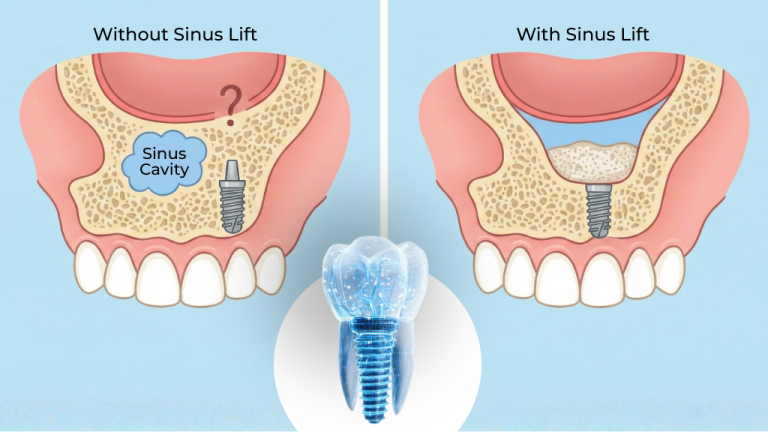
If you’re considering dental implants and your dentist mentions a sinus lift, it’s natural to feel unsure. Many patients wonder whether this step is truly necessary or if it will delay treatment. Let’s walk through what a sinus lift is, when it’s needed, and how it affects your dental implant journey—simply and clearly.
What Is a Sinus Lift?
A sinus lift, also called sinus augmentation, is a procedure that adds bone to the upper jaw in the area near the sinus cavity. This additional bone creates a strong and stable foundation for dental implants when natural bone volume is not sufficient.
Without adequate bone support, implants may not integrate properly, which can affect their long-term success.
Not every patient requires a sinus lift. The need depends on several factors, including:
- Bone height and density in the upper jaw
- The location of the missing tooth
- How long the tooth has been missing
- Overall oral and sinus health
Can Same-Day Dental Implants Be Placed After a Sinus Lift?
Healing typically takes 4 to 9 months, depending on the individual and the type of graft used. While waiting may feel frustrating, this step is essential for long-lasting and secure implant results.Dental Implant Cost and Sinus Lift Considerations
The cost of dental implants can vary based on individual needs. On average, a single dental implant may range between $3,000 and $5,000, with additional costs if procedures like a sinus lift are required.
While this may seem like a significant investment, dental implants often provide better long-term value compared to dentures or bridges due to their durability, comfort, and natural appearance.
Many clinics offer financing options and treatment plans to make implant care more affordable.
Are There Alternatives to a Sinus Lift?
In some cases, a sinus lift may be avoidable. Depending on your anatomy, your dentist may consider:
- Shorter dental implants
- Angled implant placement
- Advanced implant techniques
What Is the Sinus Lift Procedure Like?
Most patients experience minimal discomfort and can return to normal activities within a few days. Post-operative instructions help ensure smooth healing and successful bone integration.Healing and Long-Term Success
After a sinus lift, the newly placed bone gradually integrates with your natural bone over several months. Once healed, dental implants can be placed with a high success rate—often over 95%.
Although this adds time to the treatment process, it significantly improves implant stability and longevity.
Why Preventive Dental Care Matters?
Final Thoughts: Do You Really Need a Sinus Lift?
The best way to know what’s right for you is through a personalized dental evaluation. With modern imaging, advanced techniques, and experienced care, your path to a confident smile can be both safe and predictable.